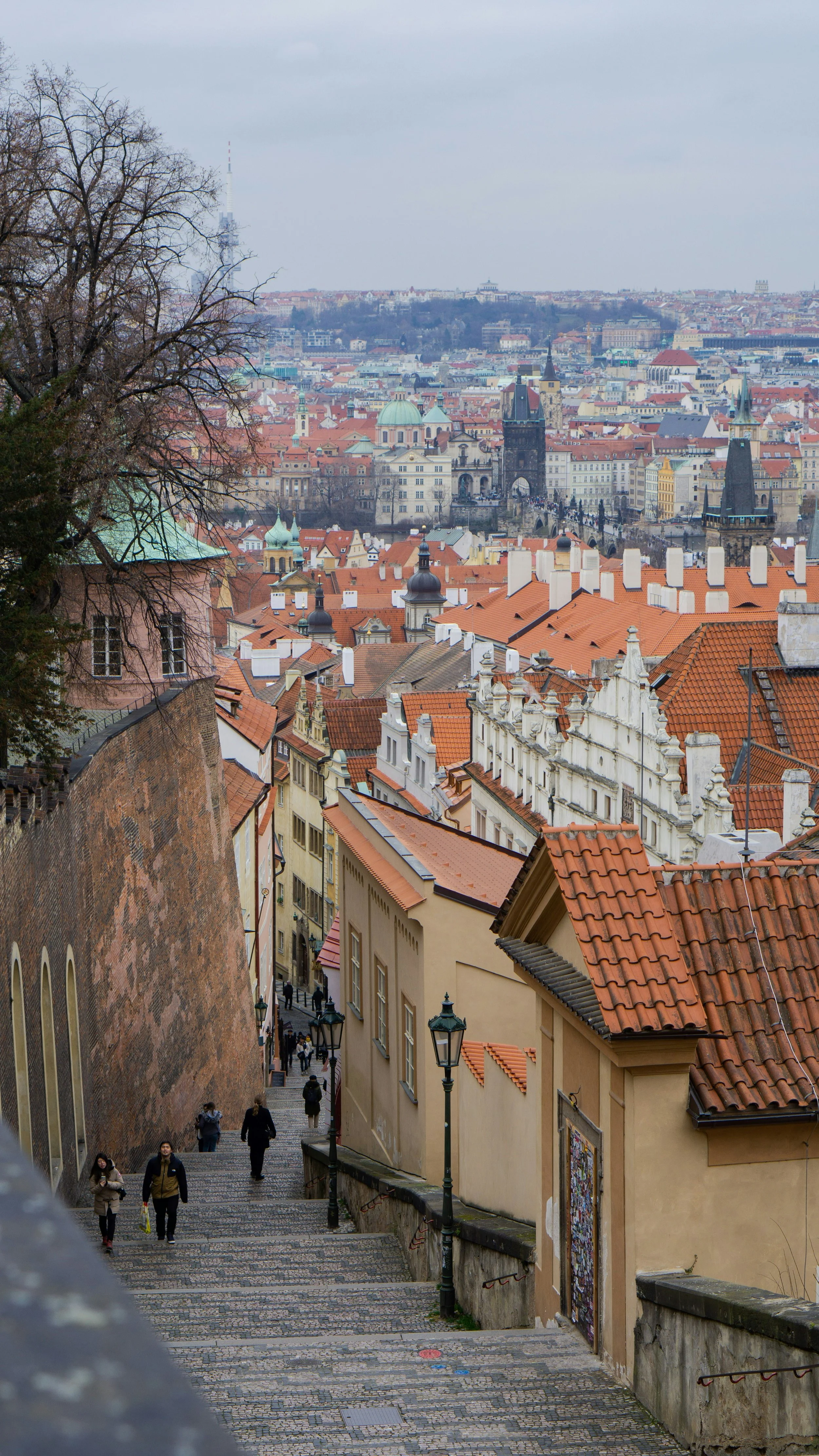
Discovering Prague
Few cities reward a wanderer as generously as Prague. The historic centre survived the twentieth century largely intact, so a walk of ten minutes can carry you past Gothic towers, Baroque churches, Art Nouveau façades and the world's first Cubist buildings without ever leaving cobblestones behind. Everything below is within an easy walk of the Maximilian Hotel, or a short tram or metro ride away - and in June, with long warm evenings and the riverbanks and beer gardens open late, the city is at its most generous.
The Old Town - On Your Doorstep
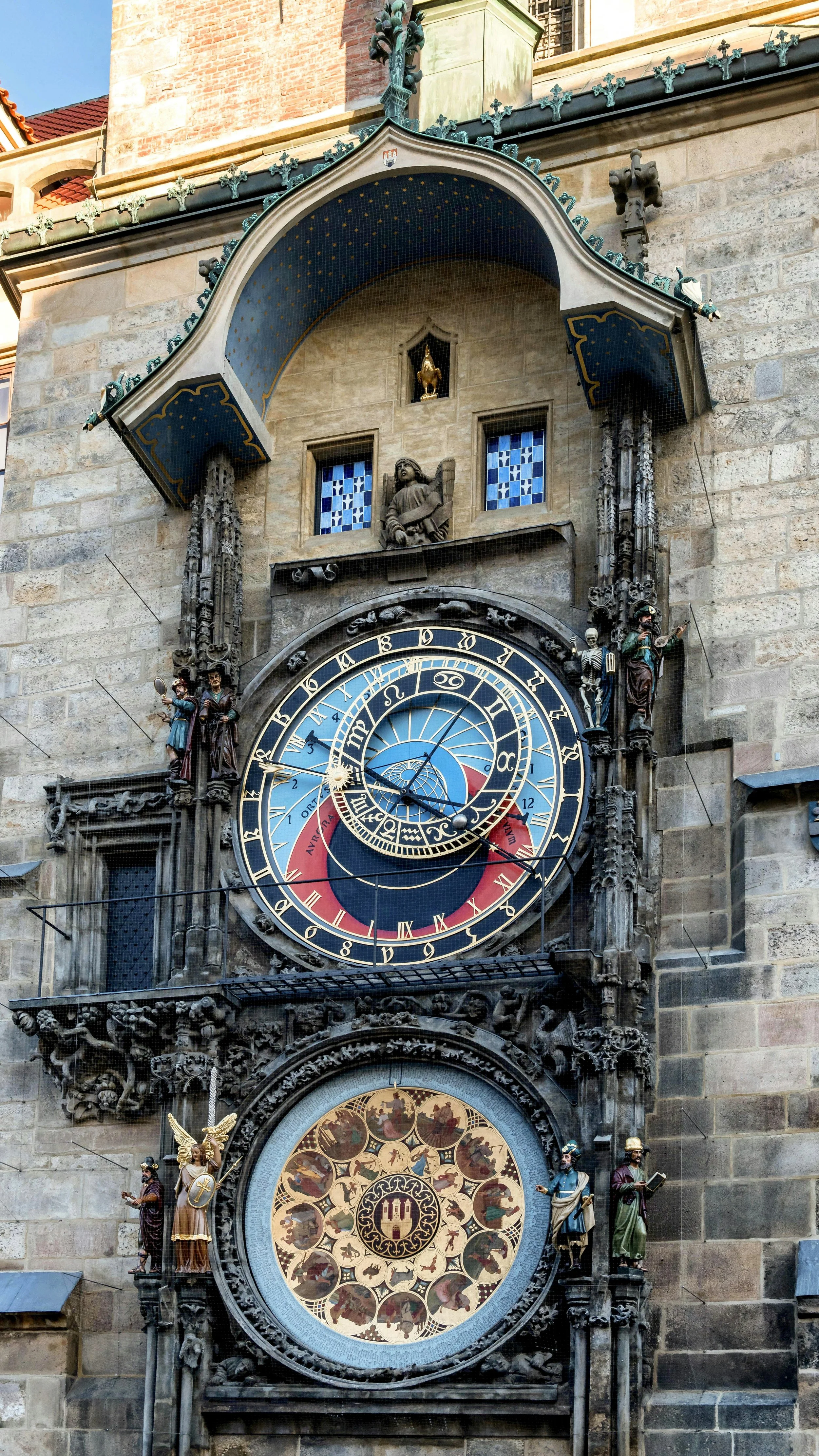
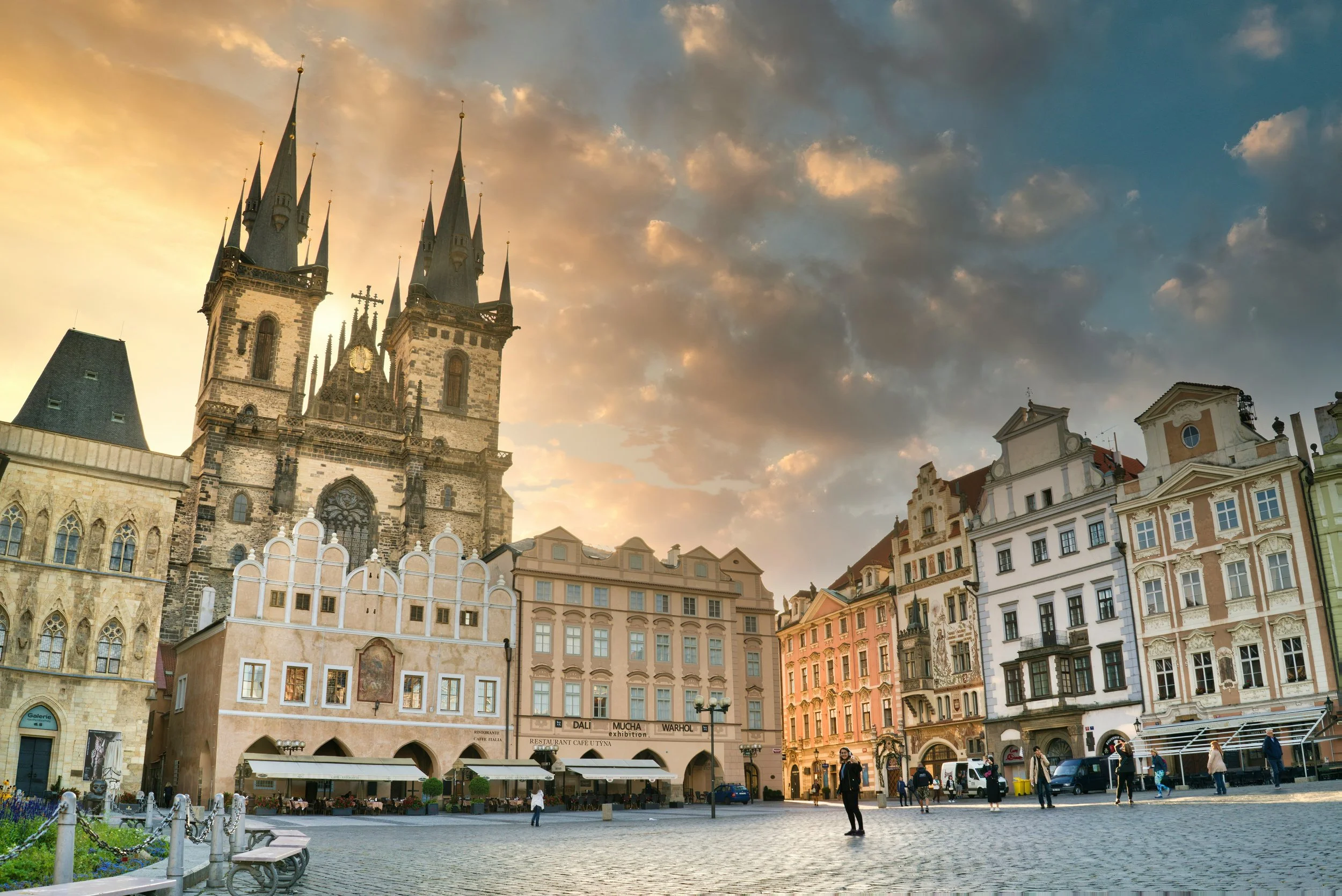
Old Town Square and the Astronomical Clock - About a five-minute walk. The medieval heart of the city, ringed by pastel façades and dominated by the twin spires of the Church of Our Lady before Týn. The Astronomical Clock has been marking the hours here since 1410; climb the Old Town Hall tower for one of the finest views in Prague.
The Jewish Quarter (Josefov) - Five minutes away. One of the most significant Jewish sites in Europe, with six historic monuments cared for by the Jewish Museum, among them the Old-New Synagogue - in continuous use since the thirteenth century - the exuberant Spanish Synagogue, and the Old Jewish Cemetery, where centuries of gravestones lean against one another beneath the trees. A single combined ticket covers the sites; booking ahead is wise.
Convent of St Agnes of Bohemia - Three minutes from the hotel, and one of Prague's quietest pleasures. A thirteenth-century Gothic convent housing the National Gallery's collection of medieval art, with a peaceful sculpture garden behind it.
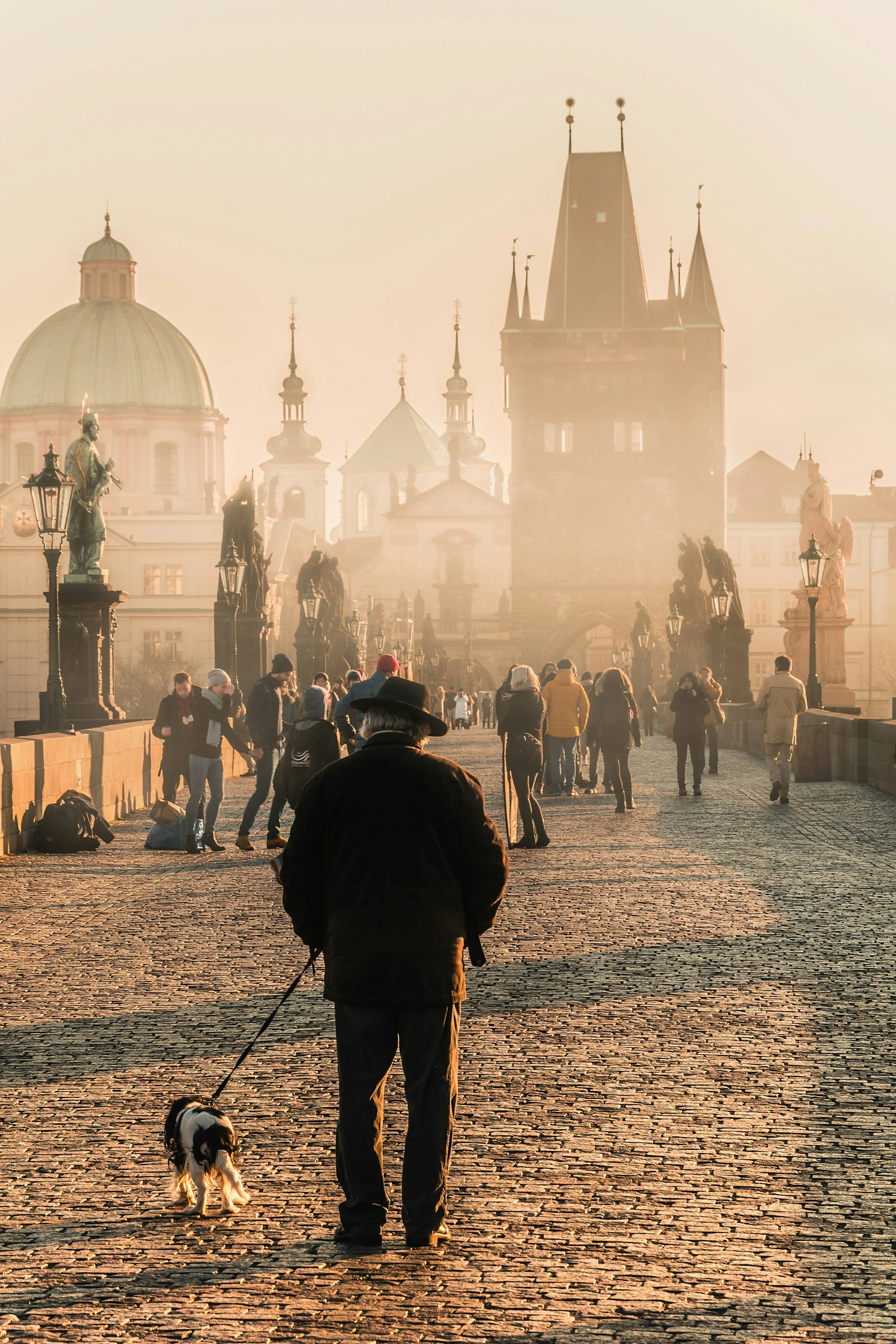
Charles Bridge - Twelve minutes on foot. Begun in 1357 under Charles IV and lined with thirty Baroque statues. It is busy by mid-morning, so go early - at sunrise, with the mist on the Vltava and the Castle above, it is unforgettable.
Municipal House and the Powder Tower - A seven-minute walk. Prague's Art Nouveau masterpiece, with interiors by Alfons Mucha and a concert hall that hosts orchestral performances most evenings, standing beside the blackened Gothic gate that once marked the entrance to the Old Town.
House of the Black Madonna - Around the corner. The first Cubist building in the world, and now the Museum of Czech Cubism; the Grand Café Orient on the first floor is the only Cubist café anywhere.
Across the River
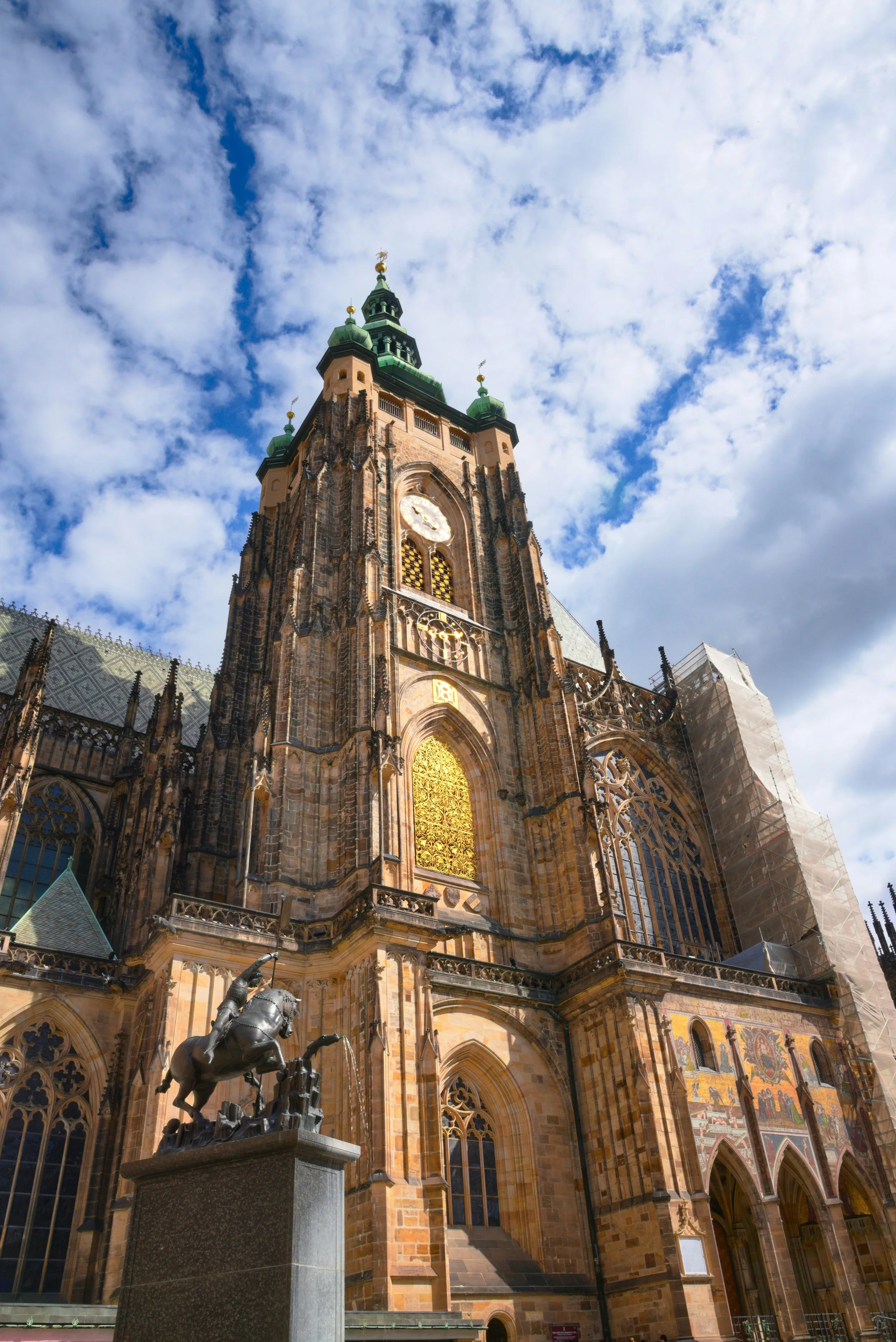
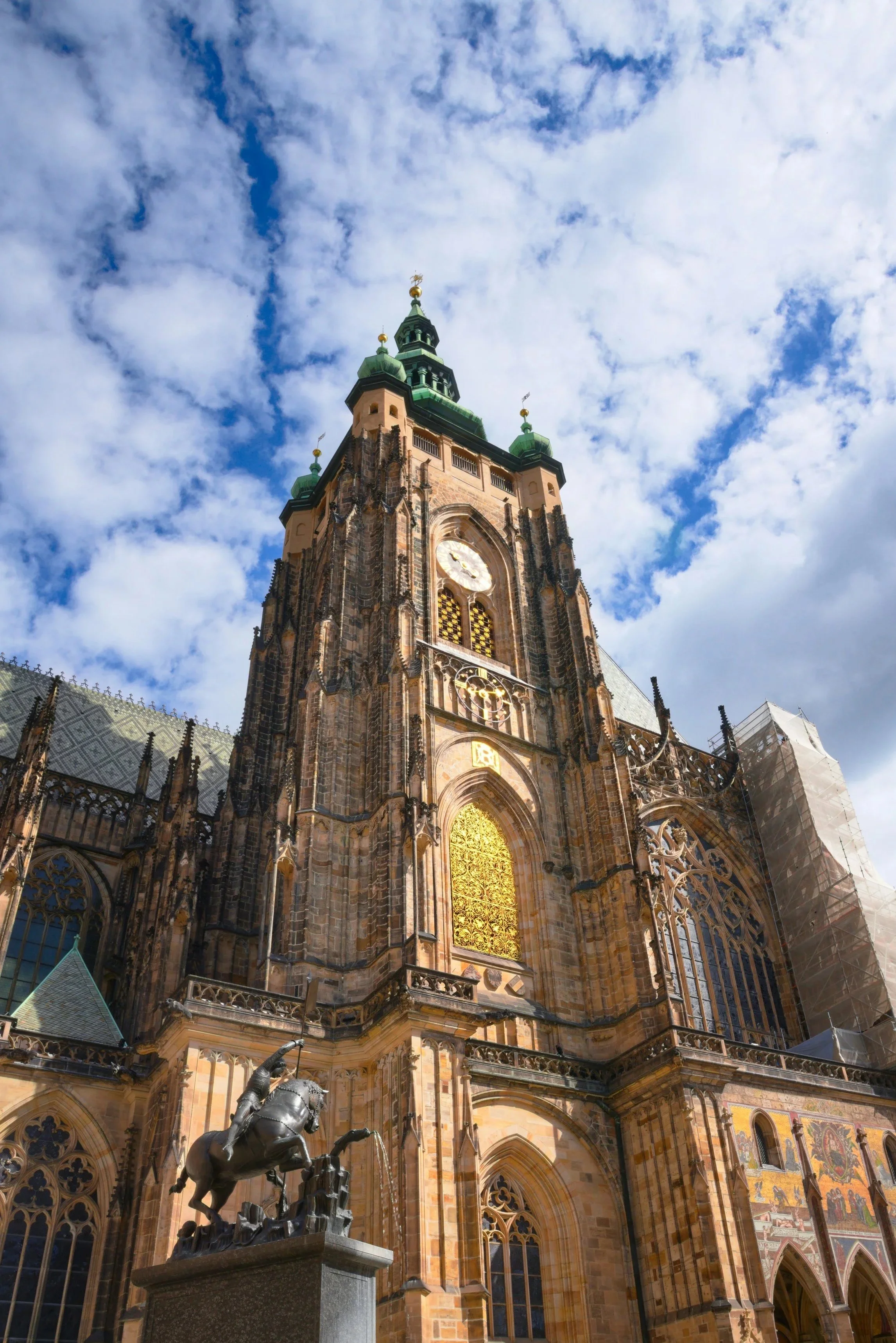
Prague Castle - The largest coherent castle complex in the world, and the seat of Czech power for over a thousand years. Within its walls are St Vitus Cathedral with its Mucha stained glass, the Old Royal Palace, the Basilica of St George and the tiny coloured houses of Golden Lane. Allow at least half a day, and consider walking down through the gardens rather than back the way you came.
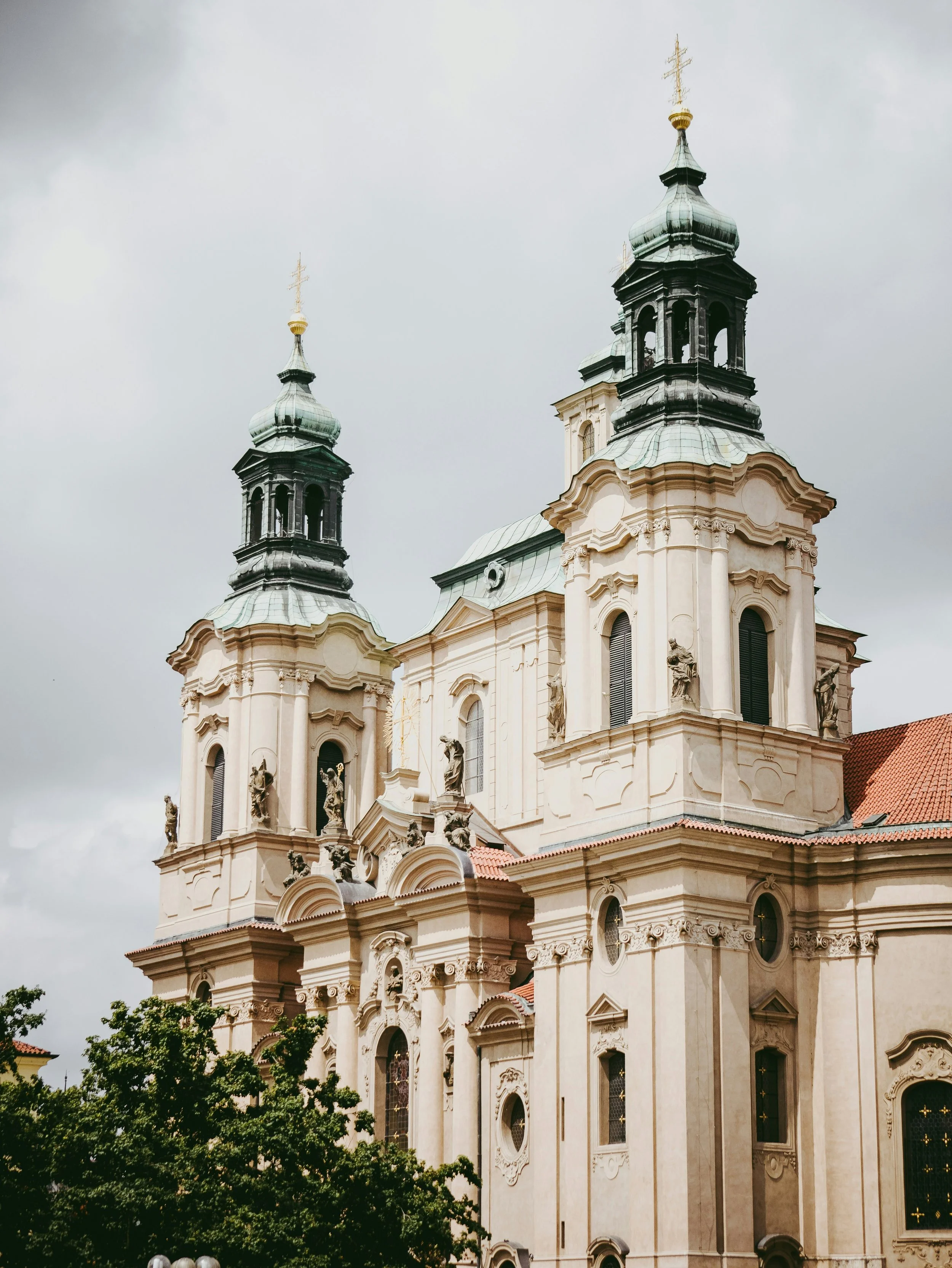
Malá Strana (the Lesser Town) - The Baroque quarter beneath the Castle: St Nicholas Church, the walled Wallenstein Garden with its peacocks, and the island of Kampa with its riverside park and modern art museum.
Petřín Hill - A funicular carries you up through orchards to a lookout tower built for the 1891 Jubilee Exhibition - a miniature Eiffel Tower with the best panorama in the city, and a rose garden and mirror maze on the way.
Strahov Monastery - Two of the most beautiful library halls in Europe, and a monastic brewery next door with a terrace overlooking the rooftops.
Letná Park - Locals' territory: a hilltop beer garden looking straight down the river and its bridges. The place to end a warm June evening.
A Little Further
Vyšehrad - The old fortress on the southern cliffs, with a neo-Gothic basilica, ramparts to walk, and a cemetery where Dvořák, Smetana and Mucha are buried. Far calmer than the centre.
Náplavka - The riverside embankment below Vyšehrad, with cafés built into the old ice cellars, boat bars moored alongside, and a farmers' market on Saturday mornings.
A boat on the Vltava - Cruises run from just below Charles Bridge; the hour-long trips give you the city's skyline from the water, and evening sailings are especially good in June.
Day Trips
Kutná Hora - About an hour by train. A UNESCO-listed silver-mining town with the extraordinary Gothic cathedral of St Barbara and, nearby, the Sedlec Ossuary.
Karlštejn Castle - Forty minutes by train and a pleasant uphill walk. Charles IV's fourteenth-century fortress, built to house the imperial crown jewels.
Terezín - About an hour north. The fortress town used by the Nazis as a ghetto and transit camp, now a memorial. A sobering and important visit.
Český Krumlov - Three hours away, and worth an overnight stay if you are extending your trip. A perfectly preserved medieval town wrapped in a bend of the Vltava.
Eating, Drinking and Evenings Out
Czech cooking is hearty and much better than its reputation - look for roast duck, svíčková, and fresh bread with beer cheese - while Prague's modern restaurant scene has earned several Michelin stars. But the real institution is beer: the Czech Republic drinks more of it per head than any nation on earth, and a properly poured Pilsner in a wood-panelled pub is a small ceremony worth witnessing. Try a traditional pub in the Old Town, a beer garden in Letná or Riegrovy sady, or one of the microbreweries that have transformed the city's drinking culture over the past decade. Classical concerts are held nightly in churches and historic halls across the centre, often at very modest prices.
Practical Notes
Currency: The Czech Republic uses the Czech koruna (CZK), not the euro. Cards are accepted almost everywhere; avoid the street exchange booths in the centre, which offer poor rates.
Getting around: The centre is best explored on foot. For anything further, the metro, trams and buses share one integrated ticket, valid for 30 or 90 minutes and bought from machines, kiosks or the PID Lítačka app. Trams 17 and 2 along the river are scenic rides in their own right.
Booking ahead: Prague Castle, the Jewish Museum and the Old Town Hall tower are all busiest in the middle of the day; early mornings are calmer, and advance tickets save queuing.
June weather: Warm and pleasant, typically in the low to mid twenties Celsius, with occasional afternoon showers. Bring comfortable shoes - the cobblestones are unforgiving.